
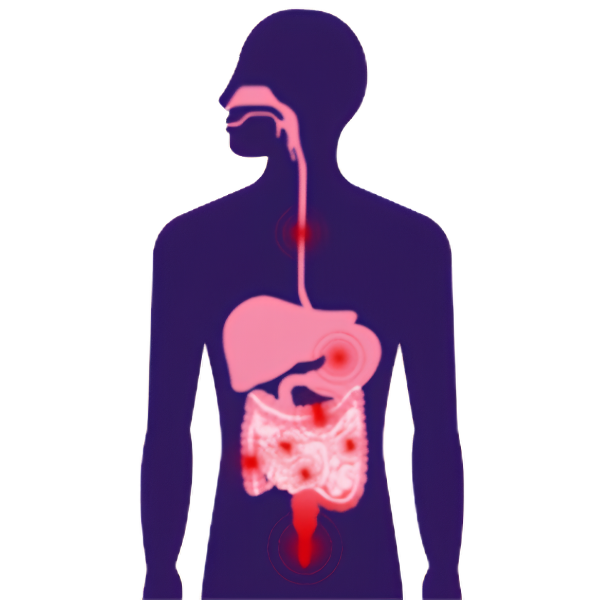

About Crohn’s disease
Crohn’s disease is a type of inflammatory bowel disease (IBD) that can cause inflammation anywhere in the digestive tract. Inflammation can cause redness, swelling and pain and is the body’s response to injury or irritation. In Crohn’s disease, it most commonly affects the end of the small intestine and/or the large intestine.
Crohn’s disease can affect the full thickness of the bowel wall. This may cause narrowing (a stricture) and an intestinal blockage, or small openings (fistulas) into the skin, other loops of bowel or other organs. It can also sometimes cause a collection of pus called an abscess.
The following fact sheets are available in Persian:
- About Crohn’s disease (Persian PDF)
- Crohn’s disease symptoms (Persian PDF)
- Diagnosing Crohn’s disease (Persian PDF)
- Treating Crohn’s disease (Persian PDF)
- About ulcerative colitis (Persian PDF)
- Ulcerative colitis symptoms (Persian PDF)
- Diagnosing ulcerative colitis (Persian PDF)
- Treating ulcerative colitis (Persian PDF)